

HOW RETAIL INVESTORS ACTUALLY GET SCREWED
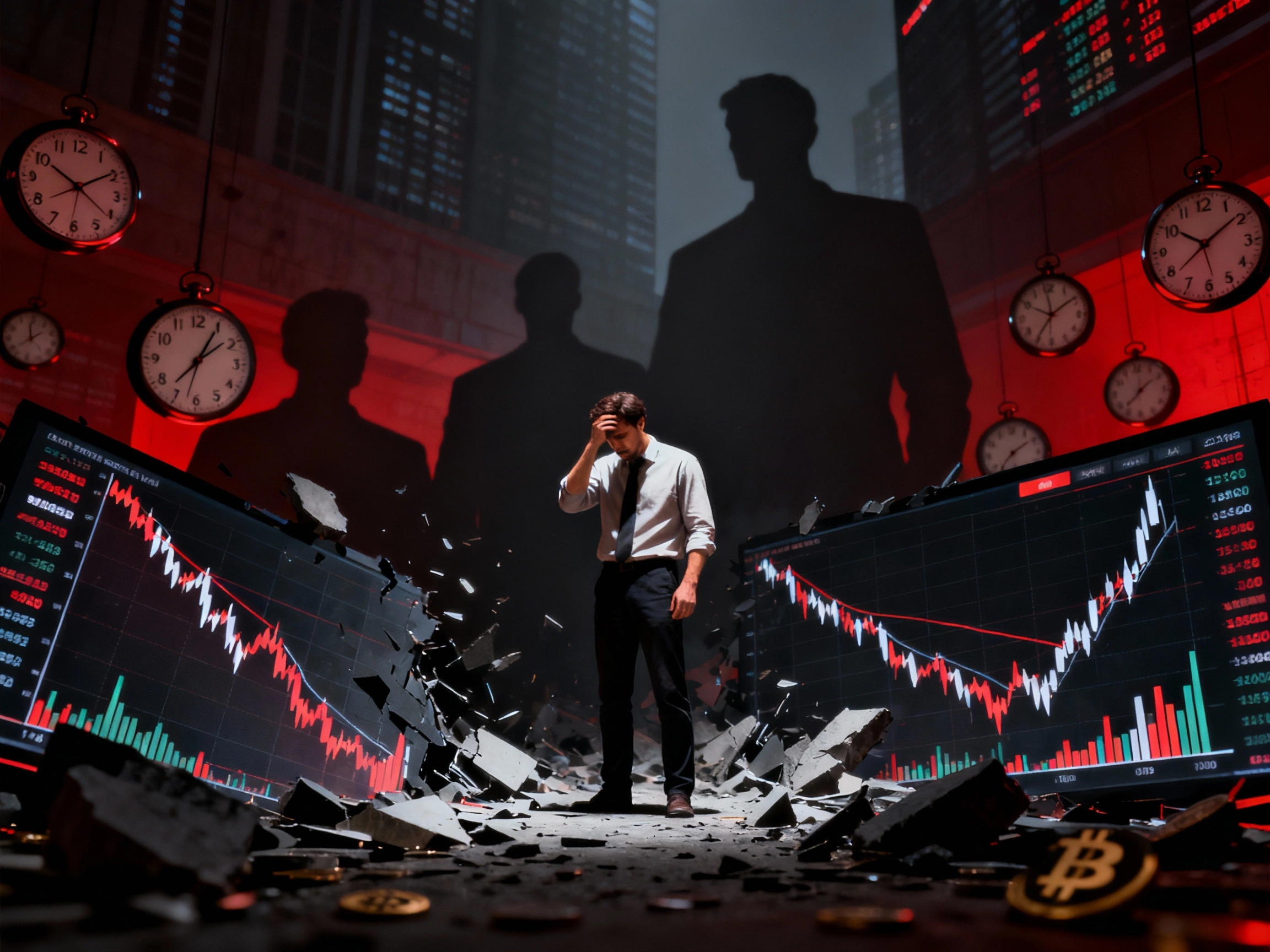
"Your Stock Tanks The Second You Buy It. Here's Why."
You've felt it, haven't you?
You do your research. Read the news. Check the charts. Watch a few YouTube videos. The stock looks good. Fundamentals are strong. Momentum is building. Everyone's talking about it.
You buy.
Then it tanks.
Not slowly. Just drops. Like the market knew you were coming and decided to punish you specifically.
You panic-sell at a loss. Feel like an idiot. Swear you'll never trade again.
Two weeks later, the stock rips higher. Without you.
You think it's bad luck. It's not.
You think you're bad at this. You're not.
You think the market is random and unpredictable. It's not.
You're just playing a rigged game. And nobody told you the rules.
THE GAME YOU DON'T KNOW YOU'RE PLAYING
Here's what actually happened:
You weren't unlucky. You were exit liquidity.
While you were reading yesterday's news and getting excited, institutions were already positioning three weeks ago. They saw something you didn't. They knew something you couldn't.
By the time you showed up, they were ready to sell to you at the top.
You didn't make a bad decision. You made an uninformed decision.
And in markets, uninformed decisions transfer wealth from you to people with better information. Every single time.
MECHANISM 1: THE DARK POOL ADVANTAGE
Let me tell you about something most retail investors don't even know exists.
Dark pools.
These are private exchanges where institutions trade without showing their hands to the public market. While you're watching the price on your app and seeing retail debate whether a stock is overvalued, they're buying massive positions in the shadows.
Right now, dark pools account for over 50% of all US stock trading. Think about that. More than half of all trades happen where you can't see them.
Here's how it works against you:
A stock is trading at what looks like a reasonable price. Sentiment seems mixed. Maybe it looks a bit extended. You're thinking about staying away, maybe even shorting it because it looks toppy.
But something else is happening that you can't see: billions in dark pool accumulation over several trading days.
You see: Price looks extended, mixed sentiment, better to stay away.
They see: Massive accumulation happening, smart money loading up, major move coming.
Two weeks later the stock rips 30% higher. You sat on the sidelines thinking it was overvalued. They bought because they knew.
You missed it entirely. They made a fortune.
That's not skill. That's information asymmetry.
And it happens every day. Every stock. Every market.
You're trading with 10% of the information. They have 100%.
They're using your caution to accumulate while you watch from the sidelines.
MECHANISM 2: THE OPTIONS FLOW "CHEAT CODE"
Ever notice how stocks make massive moves seemingly out of nowhere?
No news. No catalyst. Just boom, up 15% in a week.
You think you missed it by chance.
You didn't.
Smart money telegraphed that move weeks earlier through options.
When institutions want to position for a big move, they don't just buy the stock. That would move the price and alert everyone. Instead, they use options. They buy massive call positions at strikes that seem crazy at the time.
Stock at $50? They're buying $65 calls three months out. Thousands of contracts. Millions in premium.
You see: Nothing. You have no access to options flow data.
They see: Institutions betting huge on a major upside move. Time to position.
Two weeks later the stock announces a partnership, jumps to $68. Those calls are worth 10x what they paid. They make millions.
You find out after the move. After it's too late. After the easy money is gone.
Again, not luck. Not skill. Information.
They saw the positioning. You didn't. End of story.
MECHANISM 3: THE 72-HOUR INFORMATION GAP
Research shows there's an average 72-hour gap between when institutions act on information and when retail is even aware the information exists.
Think about that.
Three full days where smart money is positioning while you're completely oblivious.
Here's how it plays out:
Day 1: Institutions get intelligence. Could be proprietary research, could be analyzing data patterns you don't have access to, could be their networks. They start positioning.
Day 2: They continue accumulating or distributing. Price might move slightly but nothing obvious. Volume looks a bit weird but you wouldn't notice unless you're watching institutional flow.
Day 3: More positioning. They're building or exiting their position. Still no news. Nothing you can see.
Day 4: News breaks. Article gets published. CNBC covers it. NOW you hear about it.
Day 5: You finally act on the information you just learned.
But they acted 72 hours ago.
By the time you're buying, they're selling to you. By the time you're selling, they're buying from you.
You're always late. Not because you're slow. Because the information reaches you late.
And late information is expensive. It costs you returns. It costs you wealth. Every. Single. Time.
THE "DUMB MONEY" MYTH
You've heard the term "dumb money", right?
That's what institutions call retail investors. Us. You and me.
They call themselves "smart money".
Here's the truth: Retail investors aren't dumb. They're blind.
You can't see dark pools, so you can't avoid being exit liquidity.
You can't track options flow, so you can't position ahead of major moves.
You're always 72 hours behind institutional intelligence, so you're always buying tops and selling bottoms.
Not because you're stupid. Because you're operating with incomplete information.
Imagine playing poker where your opponents can see your cards but you can't see theirs.
Are you a bad poker player? No. You're just playing an impossible game.
That's retail investing right now.
Institutions see everything. You see almost nothing.
And they've convinced everyone this is normal. That this is how markets should work. That if you lose money, it's your fault for being "dumb money".
Bullshit. You're not dumb. The game is rigged.
THE WEALTH TRANSFER MACHINE
Let me give you some numbers.
In the August 2025 correction alone, retail investors lost $12.3 billion panic-selling at the bottom while institutions used that fear to accumulate.
Not million. Billion. With a B.
That money didn't evaporate into thin air. It transferred. From retail investors who were scared and blind to institutional investors who were calm and informed.
Remember March 2020? Same thing. Retail panic-sold the COVID crash. Institutions bought everything retail was selling. It was the biggest wealth transfer in modern history.
Why? Because institutions knew something retail didn't.
They knew the Fed would print trillions. They knew massive stimulus was coming. They knew it was a buying opportunity, not a selling moment.
You knew none of that. So you sold at the bottom while they bought.
Markets recovered. They made billions while you sat on the sidelines kicking yourself.
This isn't occasional. This is systematic.
Every major market move involves wealth transferring from uninformed retail to informed institutions.
Not sometimes. Every. Time.
The mechanism is always the same: information asymmetry.
"BUT ISN'T THIS ILLEGAL?"
No.
Not illegal. Just unfair.
Dark pools are legal. Options flow is legal. Institutional research networks are legal. Proprietary data platforms are legal.
Being blind is legal too. It's just really, really expensive.
The system isn't rigged by some grand conspiracy. It's rigged by access.
If you can afford a Bloomberg Terminal at $24,000 per year, you get better information.
If you can afford dark pool monitoring at $50,000 per year, you can see institutional flow.
If you can afford a research team and proprietary data feeds totalling millions per year, you get the full picture.
If you can't afford any of that? You trade blind.
And blind traders lose money to informed traders. That's not illegal. That's just math.
Wall Street doesn't need to break laws to extract wealth from retail. They just need to keep the best information expensive and inaccessible.
Which is exactly what they've done for decades.
WHY "BUY AND HOLD" IS ADVICE THAT BENEFITS THEM
Ever wonder why every financial advisor tells you to "just buy and hold" and "don't try to time the market"?
It's not bad advice. But let me tell you who benefits most from retail buying and holding: institutions.
When you buy and hold, you're providing liquidity for their trades. You're the stable base they trade around. You're their exit liquidity when they want to sell. You're their willing buyer when they want to distribute.
You're sitting there holding your index funds while they actively trade around you, using information you don't have, making profits from the volatility you're told to ignore.
Again, not illegal. Not even unethical from their perspective. Just asymmetric.
They can actively manage because they have the information. You're told to passively hold because you don't.
And that difference compounds into billions.
BUT HERE'S THE THING...
The entire system is built on one assumption:
That retail investors will never have access to institutional-grade intelligence.
As long as the tools cost millions, as long as the data stays locked behind paywalls, as long as retail keeps trading with 10% of the information, the wealth transfer continues.
But what if that assumption breaks?
What if retail could see dark pools?
What if you could track options flow?
What if you had AI analyzing thousands of signals in real time, just like institutions do?
What if the 72-hour information gap became a 72-second gap? Or no gap at all?
What happens to "smart money" when everyone has the same information?
They stop being smart money. They're just money.
The game becomes fair.
THIS IS CHANGING
For decades, the only way to access institutional intelligence was to be institutional.
Work at a hedge fund. Manage billions. Pay millions for the tools.
That's over.
AI has changed everything. The same technology that's disrupting every industry is about to democratise financial intelligence.
Not simplified information. Not watered-down data.
Actual institutional tools. Rebuilt for retail. Powered by AI. At prices everyday investors can afford.
Dark pool tracking. Options flow analysis. Multi-agent systems discovering the patterns institutions pay millions to find. Real-time intelligence that closes the 72-hour gap.
The game is changing.
The people who see it early, who position themselves with better information, who refuse to keep trading blind, those people stop being exit liquidity and start being informed investors.
You have a choice.
Keep trading blind. Keep being "dumb money" in a game where smart money has every advantage.
Or get the tools that level the playing field. See what institutions see. Know what they know. Play the actual game, not the rigged version.
THE SYSTEM DOESN'T WANT YOU TO KNOW THIS
Wall Street isn't going to advertise that you've been trading with incomplete information.
Bloomberg isn't going to tell you their Terminal gives users a massive advantage.
Hedge funds aren't going to explain how dark pools let them front-run your trades.
Why would they? They're making billions from your blindness.
But you know now.
You know about dark pools. You know about options flow. You know about the 72-hour gap.
You know why your stocks tank right after you buy them.
You can't unknow this.
Now you have to decide: keep playing blind, or demand better?
WHY I BUILT PLUTONAL
I built Plutonal because I was tired of watching people like my uncle spend six hours researching one stock with inadequate tools while institutions did the same research in six minutes with million-dollar platforms.
I built it because I'm sick of retail being called "dumb money" when they're just operating without information.
I built it because this wealth transfer from the uninformed to the informed has to stop.
This is for you.
The person who's felt that sinking feeling when a stock tanks right after you buy it.
The person who's missed massive moves and wondered how everyone else knew.
The person who's tired of being told they're bad at investing when they're really just bad at being psychic.
You're not dumb. You're blind. And we're giving you vision.
Join the waitlist. Be among the first to see what institutions see. Stop being exit liquidity. Start being informed.
The game stops being rigged the second you can see the cards.
Let's end this wealth transfer. Together.